Let’s Learn All English Tenses In Hindi: Master all 12 English Tenses In Hindi & Learn English Faster
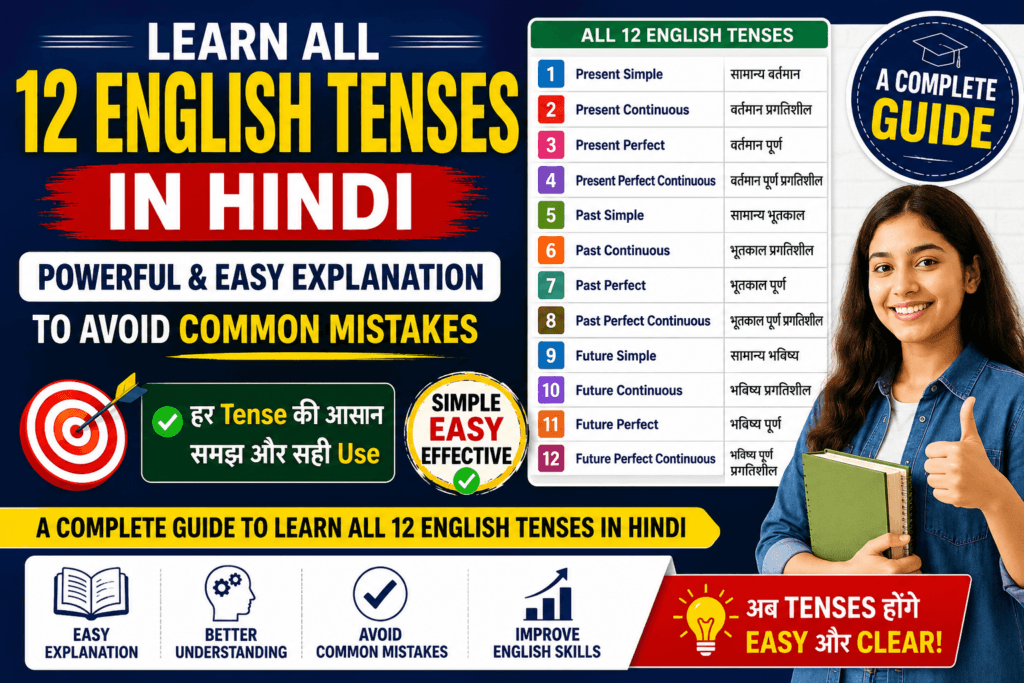
This is a “Complete Guide to Learn all 12 English Tenses in Hindi”.
क्या आप English Grammar में Tenses सीखना चाहते हैं? इस विस्तृत गाइड में Past Tense, Present Tense, Future Tense और उनके सभी 12 प्रकारों को उदाहरण, नियम, चार्ट और फॉर्मूलों सहित समझाया गया है। “English Tenses in Hindi” सीखकर आप Spoken English, Translation और Sentence Formation में महारत हासिल कर सकते हैं।
दोस्तों, English tenses को सीखने से पहले मैं उम्मीद करता हूं कि आपने इस लेख से पहले वाले लेख को अच्छे से पढ़ और समझ लिया होगा। यदि आपने उस लेख को नहीं पड़ा है, तो पहले आप उस लेख को अच्छे से पढ़ और समझ लें, ताकि English tenses आपको आसानी से समझ में आ जाए। तो आइए दोस्तों शुरू करते हैं:
दोस्तों, आगे इंग्लिश tenses सिखाने के दौरान, जो भी उदाहरण आपके समक्ष पेश किए जाएं, उन्हें बड़े ही ध्यान से और बार-बार पढ़ें। ताकि आप अंग्रेजी वाक्यों को बनाना और अंग्रेजी वाक्यों का हिंदी अनुवाद करना सीख सकें। नीचे दिए गए उदाहरणों को बार-बार पढ़ने से आपको समझ में आएगा कि किस प्रकार के वाक्यों को किस तरह बनाया जाता है। और सीख पाएंगे कि किसी विशेष वाक्य को बनाते वक्त किस शब्द को कहां पर रखना है।
तो चलिए शुरू करते हैं- English Tenses को आसान और सरल भाषा में सीखना:
Three Main Types of English Tenses(अंग्रेजी टेंस के मुख्य तीन प्रकार):
टेंस मुख्य रूप से निम्नलिखित तीन प्रकार के होते हैं:
1. Past Tense (भूतकाल) [था, थे, थी, थीं]
2. Present Tense (वर्तमान काल)
[हूं, है, हैं,]
3. Future Tense (भविष्य काल) [गा, गे, गी]
1. भूतकाल (past tense) [था, थे, थी, थीं]:
भूतकाल के वाक्यों में बीते हुए समय अर्थात गुजरे हुए समय की बातें होती हैं। भूतकाल के वाक्यों की मुख्य पहचान “था, थे, थी, थीं” होती है अर्थात भूतकाल के वाक्यों के अंत में “था, थे, थी, थीं” शब्द आते हैं अथवा इस तरह का सेंस आता है।
जैसे कि:
राम बाजार गया।
Ram went to market.
राम बाजार जा रहा था।
Ram was going to market.
राम बाजार चला गया था।
Ram had gone to market.
राम 2 घंटे से चल रहा था।
Ram had been walking
for 2 hours.
2. वर्तमान काल (present tense) [हूं, है, हैं,]:
वर्तमान काल के वाक्यों में चल रहे समय की बातें होती हैं। वर्तमान काल के वाक्यों की मुख्य पहचान “हूं, है, हैं” होती है अर्थात वर्तमान काल के वाक्यों के अंत में “हूं, है, हैं” शब्द आते हैं अथवा इस तरह का सेंस आता है।
जैसे कि:
राम बाजार जाता है।
Ram goes to market.
राम बाजार जा रहा है।
Ram is going to market.
राम बाजार चला गया है।
Ram has gone to market.
राम 2 घंटे से चल रहा है।
Ram has been walking
for 2 hours.
3. भविष्य काल (future tense) [गा, गे, गी]:
भविष्य काल के वाक्यों में आने वाले समय की बातें होती हैं। भविष्य काल के वाक्यों की मुख्य पहचान “गा, गे, गी” होती है अर्थात भविष्य काल के वाक्यों के अंत में “गा, गे, गी” शब्द आते हैं अथवा इस तरह का सेंस आता है।
जैसे कि:
राम बाजार जाएगा।
Ram will go to market.
राम बाजार जा रहा होगा।
Ram will be going to market.
राम बाजार चला गया होगा।
Ram will have gone to market.
राम 2 घंटे से चल रहा होगा।
Ram will have been walking for
2 hours.
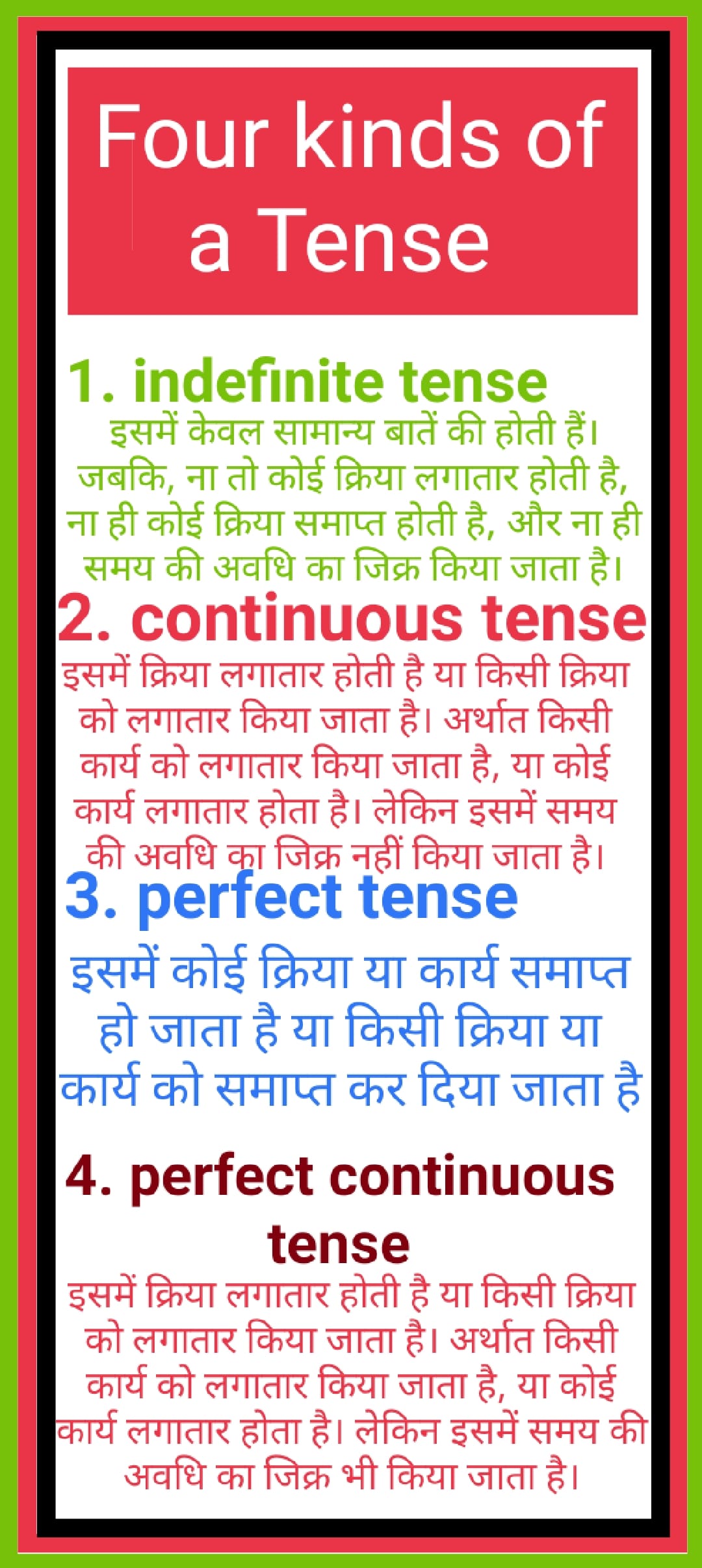
Four Kinds of A Main Type of The English Tense(मुख्य अंग्रेजी टेंस के चार प्रकार):
दोस्तों, इस से पहले कि आप इंग्लिश टेंस को सीखे, आप यह जान लें कि Tense(काल) मुख्य रूप से तीन प्रकार के होते हैं। और प्रत्येक Tense को चार-चार भागों में विभक्त किया गया है। जो कि निम्नलिखित प्रकार हैं :
1. Indefinite OR simple tense
2. Continuous tense
3. Perfect tense
4. Perfect continuous tense
Tense के चार प्रकारों को समझे:
1. Indefinite OR simple tense :
टेंस के इस प्रकार के अंतर्गत केवल सामान्य बातें की जाती है। अर्थात ना तो कोई कार्य या क्रिया लगातार होती है, और न ही कोई कार्य या क्रिया समाप्त होती है।
दोस्तों, इस प्रकार यदि और भी आसान भाषा में बोले तो, इसके अंतर्गत साधारण बातें की जाती है। अर्थात् इसके अंतर्गत ना तो कोई कार्य लगातार हो रहा होता है, और ना ही कोई कार्य समाप्त होता है।
जैसे कि:-
राम बाजार जाता है।
Ram goes to market.
राम बाजार जाएगा।
Ram will go to market.
राम बाजार गया।
Ram went to market.
2. continuous tense :
टेंस के इस प्रकार के अंतर्गत कोई कार्य अथवा क्रिया लगातार चलती है। अर्थात किसी कार्य या क्रिया को लगातार किया जाता है । लेकिन किसी कार्य या क्रिया के होने की अवधि अर्थात “समय की अवधि” का जिक्र इस टेंस में नहीं किया जाता है।
जैसे कि:-
राम बाजार जा रहा है ।
Ram is going to market.
राम बाजार जा रहा होगा ।
Ram will be going to market.
राम बाजार जा रहा था।
Ram was going to market.
3. perfect tense :
टेंस के इस प्रकार के अंतर्गत कोई कार्य या क्रिया समाप्त हो जाती है। अर्थात इसके अंतर्गत ऐसी बातें की जाती है जब कि कोई कार्य समाप्त हो चुका होता है।
जैसे कि:-
राम बाजार जा चुका है।
/राम बाजार चला गया है।
Ram has gone to market.
राम बाजार जा चुका होगा।
/राम बाजार चला गया होगा।
Ram will have gone to market.
राम बाजार जा चुका था।
/राम बाजार चला गया था।
Ram had gone to market.
4. perfect continuous tense :
टेंस के इस प्रकार के अंतर्गत कोई कार्य अथवा क्रिया लगातार चलती है। अर्थात किसी कार्य या क्रिया को लगातार किया जाता है । लेकिन किसी कार्य या क्रिया के होने की अवधि अर्थात “समय की अवधि” का जिक्र इस टेंस में किया जाता है। इस प्रकार हम कह सकते हैं कि इसके अंतर्गत ऐसी बातें की जाती है, जब कि कोई काम लगातार हो रहा हो, और साथ ही साथ समय की अवधि(time period) या समय बिंदू(point of time) भी ज्ञात हो।
जैसे कि:-
राम 2 घंटे से पढ़ रहा है।
Ram has been studying
for 2 hours.
राम 2 घंटे से पढ़ रहा होगा।
Ram will have been studying
for 2 hours.
राम 2 घंटे से पढ़ रहा था।
Ram had been studying for
2 hours.
नोट: दोस्तों ध्यान रहे कि continuous tense और perfect continuous tense दोनों में ही कार्य का लगातार होना या लगातार करना पाया जाता है, और दोनों की पहचान भी एक जैसी ही होती है। दोनों में जिस बात का अंतर होता है, वह यह है कि continuous tense में समय की अवधि(time period) या समय बिंदू(point of time) ज्ञान नहीं होता है, जबकि perfect continuous tense में समय की अवधि(time period) या समय बिंदू(point of time) ज्ञात होता है।
नीचे 👇 देखें
दोस्तों, उम्मीद है कि अब तक समझाए गए सभी तथ्यों को आपने अच्छे से सीख और समझ लिया होगा। दोस्तों, यकीन मानिए कि ऊपर दिए गए इन तथ्यों को समझने के बाद अब आपको अंग्रेजी सीखना हलवा खाने जितना ही आसान हो जाएगा।
🌹 Learn English Tenses “In Brief”(अंग्रेजी के टेंस सीखें “संक्षेप में”):
English Tenses को आसान और सरल भाषा में सीखें:दोस्तों, इस से पहले कि आप इंग्लिश टेंस को सीखे, आप in short यह जान लें कि-
Three Main Types of Tenses:
Tense(काल) मुख्य रूप से तीन प्रकार के होते हैं:
1. Past Tense (भूतकाल) [था, थे, थी, थीं]
2. Present Tense (वर्तमान काल)
[हूं, है, हैं]
3. Future Tense (भविष्य काल) [गा, गे, गी]
1. भूतकाल (past tense) [था, थे, थी, थीं]:
भूतकाल के वाक्यों में बीते हुए समय अर्थात गुजरे हुए समय की बातें होती हैं।
जैसे कि:
मैं बाजार गया।
I went to market.
वह बाजार जा रहा था।
He was going to market.
सोहन बाजार चला गया था।
Sohan had gone to market.
बबलू 2 घंटे से चल रहा था।
Bablu had been walking
for 2 hours.
2. वर्तमान काल (present tense) [हूं, है, हैं]:
वर्तमान काल के वाक्यों में चल रहे समय की बातें होती हैं।
जैसे कि:
मैं बाजार जाता हूं।
I goes to market.
वह बाजार जा रहा है।
He is going to market.
सोहन बाजार चला गया है।
Sohan has gone to market.
बबलू 2 घंटे से चल रहा है।
Bablu has been walking
for 2 hours.
3. भविष्य काल (future tense) [गा, गे, गी]:
भविष्य काल के वाक्यों में आने वाले समय की बातें होती हैं।
जैसे कि:
मैं बाजार जाऊंगा।
I will go to market.
वह बाजार जा रहा होगा।
He will be going to market.
सोहन बाजार चला गया होगा।
Sohan will have gone to market.
बबलू 2 घंटे से चल रहा होगा।
Bablu will have been walking
for 2 hours.
Four Types of A Main Tense:
प्रत्येक Main Tense(मुख्य काल) को चार-चार भागों में विभक्त किया गया है। जो कि निम्नलिखित प्रकार हैं :
1. Indefinite OR simple tense
2. Continuous tense
3. Perfect tense
4. Perfect continuous tense
1. Indefinite or simple tense :
इसके अंतर्गत साधारण बातें की जाती है। अर्थात् इसके अंतर्गत ना तो कोई कार्य लगातार हो रहा होता है, और ना ही कोई कार्य समाप्त होता है।
उदाहरण:
Hari went to market.
हरि बाजार गया ।
Hari did not go to market.
हरि बाजार नहीं गया।
Hari goes to market.
हरि बाजार जाता है।
Hari will go to market.
हरि बाजार जाएगा ।
2. continuous tense :
इसके अंतर्गत ऐसी बातें होती है, जबकि कोई कार्य लगातार हो रहा हो।
उदाहरण:
Hari was going to market.
हरि बाजार जा रहा था।
Hari was not going to market.
हरि बाजार नहीं जा रहा था।
Hari is going to market.
हरि बाजार जा रहा है।
Hari will be going to market.
हरि बाजार जा रहा होगा।
3. perfect tense :
इसके अंतर्गत ऐसी बातें की जाती है जब कि कोई कार्य समाप्त हो चुका होता है।
उदाहरण:
Hari had gone to market.
हरि बाजार चला गया था/जा चुका था।
Hari had not gone to market.
हरि बाजार नहीं गया था।
Hari has gone to market.
हरि बाजार जा चुका है/चला गया है।
Hari will have gone to market.
हरि बाजार जा चुका होगा/चला जाएगा।
4. perfect continuous tense :
इसके अंतर्गत ऐसी बातें की जाती है, जब कि कोई काम लगातार हो रहा हो, और साथ ही साथ समय की अवधि(time period) या समय बिंदू(point of time) भी ज्ञात हो।
उदाहरण:
Hari had been studying for 2 hours.
हरि 2 घंटे से पढ़ रहा था।
Hari had not been studying for 2 hours.
हरि 2 घंटे से नहीं पढ़ रहा था।
Hari has been studying since morning.
हरि सुबह से पढ़ रहा है।
Hari will have been studying since 9 o’clock.
हरि 9:00 बजे से पढ़ रहा होगा।
नोट: दोस्तों ध्यान रहे कि continuous tense और perfect continuous tense दोनों में ही कार्य का लगातार होना या लगातार करना पाया जाता है, और दोनों की पहचान भी एक जैसी ही होती है। दोनों में जिस बात का अंतर होता है, वह यह है कि continuous tense में समय की अवधि(time period) या समय बिंदू(point of time) ज्ञान नहीं होता है, जबकि perfect continuous tense में समय की अवधि(time period) या समय बिंदू(point of time) ज्ञात होता है।
🌹 Total 12 Kinds of The 3 Main Types of The English tense(3 मुख्य अंग्रेजी टेंस के कुल 12 प्रकार):
अंग्रेजी के सभी टेंस(काल) सीखें (Learn English Tenses):
दोस्तो, आगे इंग्लिश tense सिखने के दौरान, जो उदाहरण आपके समक्ष पेश किए जाएं, उन्हें आप बड़े ही ध्यान से और बार-बार पढ़ें। ताकि आप अंग्रेजी वाक्य को बनाना और अंग्रेजी वाक्यों का हिंदी अनुवाद करना सीख सकें। नीचे दिए गए उदाहरणों को बार बार पढ़ने से आपको समझ में आएगा कि किस प्रकार के वाक्य को किस तरह बनाया जाता है। और सीख पाएंगे कि किसी विशेष वाक्य को बनाते वक्त किस शब्द को कहां पर रखना है।
दोस्तों, इंग्लिश टेंस(English tense) मुख्य रूप से निम्नलिखित तीन प्रकार के होते हैं। और फिर प्रत्येक टेंस को चार-चार प्रकारों में वर्गीकरण किया जाता है। जो की निम्नानुसार है:
1. PAST TENSE:
१. Past indefinite tense
२. Past continuous tense
३. past perfect tense
४. past perfect continuous tense
2. PRESENT TENSE:
१. present indefinite tense
२. present continuous tense
३. present perfect tense
४. present perfect continuous
tense
3. FUTURE TENSE:
१. future indefinite tense
२. future continuous tense
३. future perfect tense
४. future perfect continuous
tense
आइए दोस्तों, इन सभी को डिटेल में समझते हैं:
१. भूतकाल (past tense) [था, थे, थी, थीं]:
भूतकाल के वाक्यों में बीते हुए समय अर्थात गुजरे हुए समय की बातें होती हैं। भूतकाल के वाक्यों की मुख्य पहचान “था, थे, थी, थीं” होती है अर्थात भूतकाल के वाक्यों के अंत में “था, थे, थी, थीं” शब्द आते हैं अथवा इस तरह का सेंस आता है।
भूतकाल को चार भागों में बांटा गया है, जो कि निम्नलिखित प्रकार है:
1. past indefinite / simple tense:
पहचान:-[ली, दी, की, लिया, दिया, किया, ता था, ती थी, ती थीं, ते थे]
सहायक क्रिया:-[did]
मुख्य क्रिया:-नकारात्मक, प्रश्नवाचक और नकारात्मक-प्रश्नवाचक वाक्य में सहायक क्रिया did के साथ V1, और सकारात्मक वाक्य में V2 [केवल “ली, दी, की, लिया, दिया, किया” के अर्थ के लिए]
नोट:- “ता था, ती थी, ती थीं, ते थे” के अर्थ के लिए नकारात्मक, प्रश्नवाचक और नकारात्मक-प्रश्नवाचक वाक्य में सहायक क्रिया did के साथ “use to+V1″और सकारात्मक वाक्य में “used to+V1” का प्रयोग किया जाता है।
Note:- हमेशा ध्यान रखें कि “use to+V1″और “used to+V1” का प्रयोग मॉडल वर्ब्स की श्रेणी में आता है।
उदाहरण:
Mohan met me.
मोहन मुझसे मिला।
Mohan used to meet me.
मोहन मुझसे मिलता था।
Mohan did not meet me.
मोहन मुझसे नहीं मिला।
Mohan did not use to meet me.
मोहन मुझसे नहीं मिलता था।
Did Mohan meet me?
क्या मोहन मुझसे मिला?
Did Mohan use to meet me?
क्या मोहन मुझसे मिलता था?
Did Mohan not meet me?
क्या मोहन मुझसे नहीं मिला?
Did Mohan not use to meet me?
क्या मोहन मुझसे नहीं मिलता था?
Who did meet me?
मुझसे कौन मिला?
Who did use to meet me?
मुझसे कौन मिलता था?
Who did not meet me?
मुझसे कौन नहीं मिला?
Who did not use to meet me?
मुझसे कौन नहीं मिलता था?
2. past continuous tense:
पहचान:-[रहा था, रही थी, रही थीं, रहे थे]
सहायक क्रिया:-[was, were]
मुख्य क्रिया:- V1+ing
उदाहरण:
Sita was singing.
सीता गा रही थी।
Sita was not singing.
सीता नहीं गा रही थी।
Was Sita singing?
क्या सीता गा रही थी?
Was Sita not singing?
क्या सीता नहीं गा रही थी?
Who was singing?
कौन गा रहा था?
Who was not singing?
कौन नहीं गा रहा था?
3. past perfect tense:
पहचान:-[चुका था, चुकी थी, चुकी थीं, चुके थे, ली थी, दी थी, की थी, लिया था, दिया था, किया था ]
सहायक क्रिया:-[had]
मुख्य क्रिया:- V3
उदाहरण:
Ramesh had eaten food.
रमेश ने खाना खा लिया था।
/रमेश खाना खा चुका था।
Ramesh had not eaten food.
रमेश ने खाना नहीं खाया था।
/रमेश खाना नहीं खा चुका था।
Had Ramesh eaten food?
क्या रमेश ने खाना खा लिया था?
Had Ramesh not eaten food?
क्या रमेश ने खाना नहीं खाया था?
Who had eaten food?
कौन खाना खा चुका था?
Who had not eaten food?
किसने खाना नहीं खाया था?
4. past perfect continuous tense:
पहचान:-[रहा था, रही थी, रही थीं, रहे थे]
सहायक क्रिया:-[had been]
मुख्य क्रिया:- V1+ing
उदाहरण:
Sita had been teaching for 2 hours.
सीता 2 घंटे से पढ़ा रही थी।
Sita had not been teaching for 2 hours.
सीता 2 घंटे से नहीं पढ़ा रही थी।
Had Sita been teaching for 2 hours?
क्या सीता 2 घंटे से पढ़ा रही थी?
Had Sita not been teaching for 2 hours?
क्या सीता 2 घंटे से नहीं पढ़ा रही थी?
Who had been teaching for 2 hours?
2 घंटे से कौन पढ़ा रहा था?
Who had not been teaching for 2 hours?
2 घंटे से कौन नहीं पढ़ा रहा था?
२. वर्तमान काल (present tense) [हूं, है, हैं]:
वर्तमान काल के वाक्यों में चल रहे समय की बातें होती हैं। वर्तमान काल के वाक्यों की मुख्य पहचान “हूं, है, हैं” होती है अर्थात वर्तमान काल के वाक्यों के अंत में “हूं, है, हैं” शब्द आते हैं अथवा इस तरह का सेंस आता है।
1. present indefinite / simple tense:
पहचान:-[ता है, ती है, ती हैं, ते हैं]
सहायक क्रिया:-[do, does]
मुख्य क्रिया:-सहायक क्रिया do/does के साथ V1, सकारात्मक वाक्य में V1 या V1+s/es
उदाहरण:
I work hard.
मैं कठिन परिश्रम करता हूं।
We work hard.
हम कठिन परिश्रम करते हैं।
Ram does not work hard.
राम कठिन परिश्रम नहीं करता।
We do not work hard.
हम कठिन परिश्रम नहीं करते।
Does Ram work hard?
क्या राम कठिन परिश्रम करता है?
Do we work hard?
क्या हम कठिन परिश्रम करते हैं?
Does Ram not work hard?
क्या राम कठिन परिश्रम नहीं करता है?
Do we not work hard?
क्या हम कठिन परिश्रम नहीं करते हैं?
Who does work hard?
कौन कठिन परिश्रम करता है?
Who does not work hard?
कौन कठिन परिश्रम नहीं करता है?
2. present continuous tense:
पहचान:-[रहा है, रही है, रही हैं, रहे हैं]
सहायक क्रिया:-[is, are, am]
मुख्य क्रिया:-V1+ing
उदाहरण:
I am laughing.
मैं हंस रहा हूं।
I am not laughing.
मैं नहीं हंस रहा हूं।
Am I laughing?
क्या मैं हंस रहा हूं?
Am I not laughing?
क्या मैं नहीं हंस रहा हूं?
Why am I laughing?
मैं क्यों हंस रहा हूं?
Why am I not laughing?
मैं क्यों नहीं हंस रहा हूं?
He is dancing.
वह नाच रहा है।
He is not dancing.
वह नहीं नाच रहा है।
Is he dancing?
क्या वह नाच रहा है?
Is he not dancing?
क्या वह नहीं नाच रहा है?
Why is he dancing?
वह क्यों नाच रहा है?
Why is he not dancing?
वह क्यों नहीं नाच रहा है?
You are running.
तुम दौड़ रहे हो।
you are not running.
तुम नहीं दौड़ रहे हो।
Are you running?
क्या तुम दौड़ रहे हो?
Are you not running?
क्या तुम नहीं दौड़ रहे हो?
Why are you running?
तुम क्यों दौड़ रहे हो?
Why are you not running?
तुम क्यों नहीं दौड़ रहे हो?
3. present perfect tense:
पहचान:-[चुका है, चुकी है, चुकी हैं, चुके हैं, ली है, दी है, की है, लिया है, दिया है, किया है]
सहायक क्रिया:-[has, have]
मुख्य क्रिया:-V3
उदाहरण:
He has eaten food.
उसने खाना खा लिया है।
He has not eaten food.
उसने खाना नहीं खाया है।
Has he eaten food?
क्या उसने खाना खा लिया है?
Has he not eaten food?
क्या उसने खाना नहीं खाया है?
Why has he eaten food?
उसने खाना क्यों खाया है?
Why has he not eaten food?
उसने खाना क्यों नहीं खाया है?
I have eaten food.
मैंने खाना खा लिया है।
I have not eaten food.
मैंने खाना नहीं खाया है।
Have I eaten food?
क्या मैंने खाना खा लिया है?
Have I not eaten food?
क्या मैंने खाना नहीं खाया है?
Why have I eaten food?
मैंने खाना क्यों खाया है?
Why have I not eaten food?
मैंने खाना क्यों नहीं खाया है?
4. present perfect continuous tense:
पहचान:-[रहा है, रही है, रही हैं, रहे हैं]
सहायक क्रिया:-[has been, have been]
मुख्य क्रिया:-V1+ing
उदाहरण:
He has been eating food for 2 hours.
वह 2 घंटे से खाना खा रहा है।
He has not been eating food for 2 hours.
वहां 2 घंटे से खाना नहीं खा रहा है।
Has he been eating food for 2 hours?
क्या वह 2 घंटे से खाना खा रहा है?
Has he not been eating food for 2 hours?
क्या वह 2 घंटे से खाना नहीं खा रहा है?
Why has he been eating food for 2 hours?
वहां 2 घंटे से खाना क्यों खा रहा है?
Why has he not been eating food for 2 hours?
वहां 2 घंटे से खाना क्यों नहीं खा रहा है?
I have been eating food for 2 hours.
मैं 2 घंटे से खाना खा रहा हूं।
I have not been eating food for 2 hours.
मैं 2 घंटे से खाना नहीं खा रहा हूं।
Have I been eating food for 2 hours?
क्या मैं 2 घंटे से खाना खा रहा हूं?
Have I not been eating food for 2 hours?
क्या मैं 2 घंटे से खाना नहीं खा रहा हूं?
Why have I been eating food for 2 hours?
मैं 2 घंटे से खाना क्यों खा रहा हूं?
Why have I not been eating food for 2 hours?
मैं 2 घंटे से खाना क्यों नहीं खा रहा?
३. भविष्य काल (future tense) [गा, गे, गी]:
भविष्य काल के वाक्यों में आने वाले समय की बातें होती हैं। भविष्य काल के वाक्यों की मुख्य पहचान “गा, गे, गी” होती है अर्थात भविष्य काल के वाक्यों के अंत में “गा, गे, गी” शब्द आते हैं अथवा इस तरह का सेंस आता है।
1. future indefinite / simple tense:
पहचान:-[गा, गे, गी]
सहायक क्रिया:-[will]
मुख्य क्रिया:-V1
उदाहरण:
He will go.
वह जाएगा।
He will not go.
वह नहीं जाएगा।
Will he go?
क्या वह जाएगा?
Will he not go?
क्या वह नहीं जाएगा?
Why will he go?
वह क्यों जाएगा?
Why will he not go?
वहां क्यों नहीं जाएगा?
2. future continuous tense:
पहचान:-[रहा होगा, रही होगी, रही होंगी, रहे होंगे]
सहायक क्रिया:-[will be]
मुख्य क्रिया:-V1+ing
उदाहरण:
I will be going.
मैं जा रहा होऊंगा।
I will not be going.
मैं नहीं जा रहा होऊंगा।
Will I be going?
क्या मैं जा रहा होऊंगा?
Will I not be going?
क्या मैं नहीं जा रहा होऊंगा ?
Where will I be going?
मैं कहां जा रहा होऊंगा ?
Where will I not be going?
मैं कहां नहीं जा रहा होऊंगा ?
3. future perfect tense:
पहचान:-[चुका होगा, चुकी होगी, चुकी होंगी, चुके होंगे, लिया होगा, दिया होगा, किया होगा, ली होगी, दी होगी, की होगी]
सहायक क्रिया:-[will have]
मुख्य क्रिया:-V3
उदाहरण:-
I will have gone.
मैं जा चुका होऊंगा ।
I will not have gone.
मैं नहीं जा चुका होऊंगा ।
Will I have gone?
क्या मैं जा चुका होऊंगा ?
Will I not have gone?
क्या मैं नहीं जा चुका होऊंगा ?
Where will I have gone?
मैं कहां जा चुका होऊंगा ?
Where will I not have gone?
मैं कहां नहीं जा चुका होऊंगा ?
4. future perfect continuous tense:
पहचान:-[रहा होगा, रही होगी, रही होंगी, रहे होंगे]
सहायक क्रिया:-[will have been]
मुख्य क्रिया:-V1+ing
उदाहरण:
I will have been studying for 2 hours.
मैं 2 घंटे से पढ़ रहा होऊंगा।
I will not have been studying for 2 hours.
मैं 2 घंटे से नहीं पढ़ रहा होऊंगा ।
Will I have been studying for 2 hours?
क्या मैं 2 घंटे से पढ़ रहा होऊंगा ?
Will I not have been studying for 2 hours?
क्या मैं 2 घंटे से नहीं पढ़ रहा होऊंगा ?
Why will I have been studying for 2 hours?
मैं 2 घंटे से क्यों पढ़ रहा होऊंगा ?
Why will I not have been studying for 2 hours?
मैं 2 घंटे से क्यों नहीं पढ़ रहा होऊंगा ?
नोट:
👉हमेशा ध्यान रखें कि past indefinite tense के वाक्यों के अंत में कभी भी “था, थे, थी” नहीं आता है।
👉Past indefinite tense में सकारात्मक वाक्यों (affirmative sentences) में केवल मुख्य क्रिया(helping verb) की सेकंड फॉर्म (V2) का ही उपयोग किया जाता है, सहायक क्रिया का उपयोग नहीं किया जाता है।
जबकि, नकारात्मक(negative), प्रश्नवाचक (interrogative) और नकारात्मक-प्रश्नवाचक(negative-interrogative) वाक्यों में हेल्पिंग वर्ब did के साथ मुख्य क्रिया की फर्स्ट फॉर्म(V1) का उपयोग किया जाता है।
👉 Present indefinite tense में सकारात्मक वाक्य में “V1 या V1+s/es” वाला नियम लागू होता है।
जबकि, नकारात्मक, प्रश्नवाचक और नकारात्मक प्रश्नवाचक वाक्यों में सहायक क्रिया do/does के साथ मुख्य क्रिया की फर्स्ट फॉर्म(V1) का प्रयोग किया जाता है।
👉 ध्यान रहे, पहले ही बताया जा चुका है कि यदि कर्ता third person singular subject हो, तो मुख्य क्रिया की फर्स्ट फॉर्म (V1) में s/es लगेगा, अन्यथा नहीं लगेगा, और मुख्य क्रिया की फर्स्ट फॉर्म(V1) का ही उपयोग किया जाएगा।
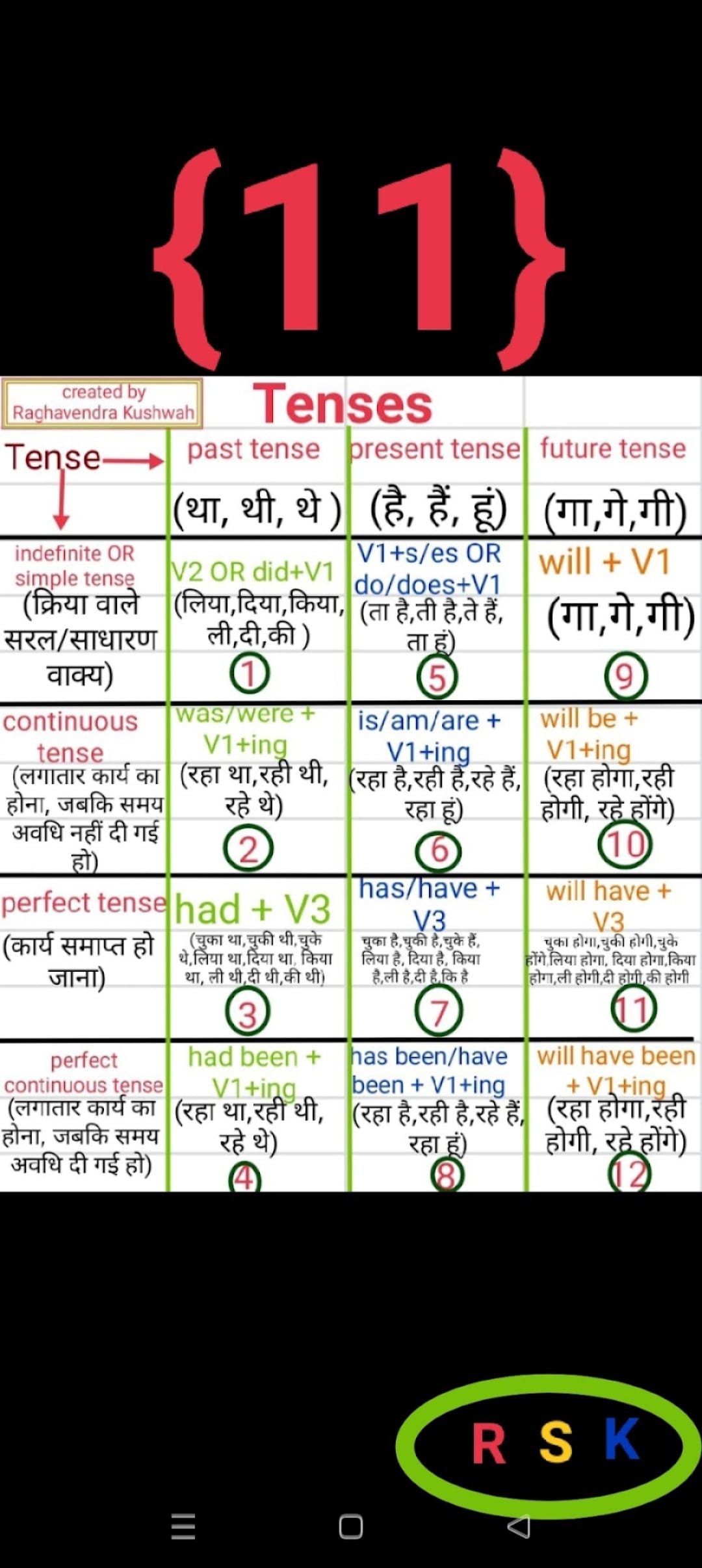
दोस्तों, नीचे दिए गए चार्ट् की सहायता से आप बहुत ही आसानी और सरलता के साथ सभी Tenses को सीख सकते हो। लेकिन शर्त यह है कि इस लेख की सारी बातों को आपने ध्यान से पढ़ लिया हो। 👇
नीचे 👇 देखें
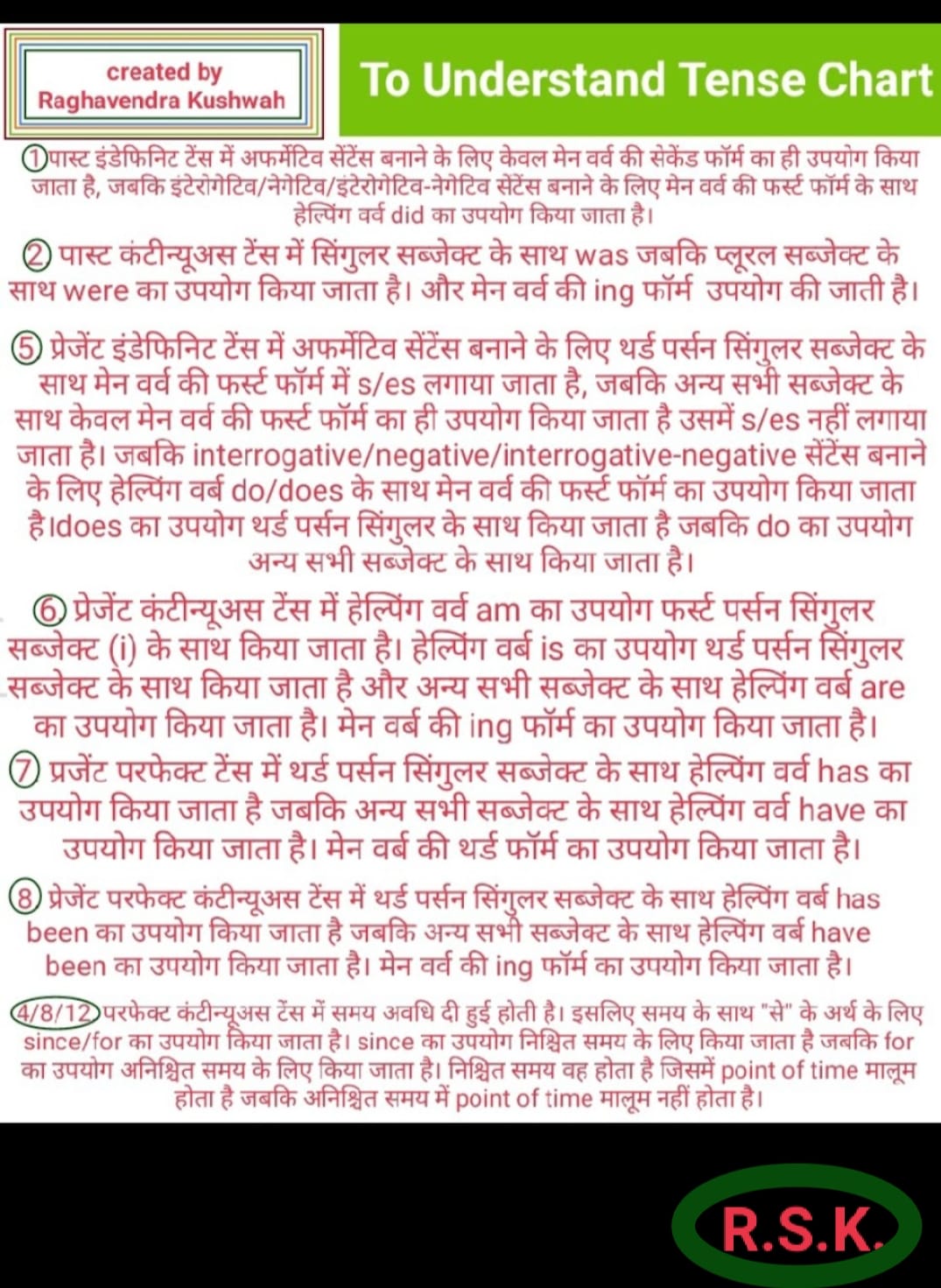
दोस्तों, ऊपर👆 दिए गए Tense Chart को अच्छे से समझने के लिए मैंने नीचे दिए गए चार्ट में सारे बिंदुओं को क्रमस: नंबर वाइज समझाया है। अत: नीचे दिए गए चार्ट की डिटेल्स को अच्छे से पढ़े और समझे:
👇
Thank you for visiting “The RSK English Hub” and being a part of our learning community.
Answer: English Tense वह व्याकरणिक प्रणाली है जो किसी कार्य के समय (भूतकाल, वर्तमान काल और भविष्य काल) को दर्शाती है।
Q. English Tenses कितने प्रकार के होते हैं?
Answer: English Tenses मुख्य रूप से 3 प्रकार के होते हैं—Past, Present और Future Tense। प्रत्येक के 4 उपप्रकार होते हैं, इसलिए कुल 12 Tenses होते हैं।
Q. Tense सीखने का सबसे आसान तरीका क्या है?
Answer: Tense सीखने के लिए पहले Tense Chart, Helping Verbs, Verb Forms और Sentence Structure को समझना चाहिए। नियमित अभ्यास से Tenses आसानी से सीखे जा सकते हैं।
Q. English Grammar में सबसे महत्वपूर्ण Tense कौन सा है?
Answer: Present Indefinite Tense सबसे अधिक उपयोग होने वाला Tense है क्योंकि दैनिक बातचीत में इसका सबसे ज्यादा प्रयोग होता है।
Q. क्या Tenses सीखने से Spoken English बेहतर होती है?
Answer: हाँ, Tenses की सही समझ से Spoken English, Writing Skills और Translation Skills में काफी सुधार होता है।
Q. Tense Chart से English Grammar कैसे सीखें?
Answer: Tense Chart सभी Tenses के Rules, Helping Verbs और Sentence Structures को एक स्थान पर दिखाता है, जिससे सीखना आसान हो जाता है।
Query Solved in This Article:
• All 12 English Tenses Explained in Hindi
• 12 Types of Tenses
• Complete Guide to 12 English Tenses
• continuous future tense examples
• correct tense
• English Grammar
• english grammar in hindi
• English Grammar Rules
• english grammar tenses
• English Learning
• english tense
• English Tense Chart
• English Tenses
• english tenses in hindi
• English Tenses in Hindi Chart
• example for present tense
• example for simple future tense
• example of present indefinite tense
• example of simple future
• example of simple future tense
• examples for past continuous tense
• flight past tense
• future continuous
• future continuous tense
• future continuous tense examples
• future indefinite tense
• future indefinite tense in hindi
• future perfect continuous
• future perfect continuous tense
• future perfect continuous tense examples
• future perfect examples
• future perfect tense
• future perfect tense examples
• future tense
• future tense examples
• future tenses
• grammar tenses
• Learn English Tenses
• learn past tense
• learn tenses easily
• Learn Tenses in Hindi
• meaning of present tense
• past and past perfect tense
• past continuous
• past continuous tense
• past continuous tense examples
• past indefinite tense
• past past tense
• past perfect continuous
• past perfect continuous tense
• past perfect continuous tense examples
• past perfect examples
• past perfect exercises
• past perfect tense
• past perfect tense examples
• past present and future tense
• past present future tense
• past progressive tense
• past simple
• past simple exercises
• past simple tense sentences
• Past tense
• past tense and past perfect tense
• past tense examples
• past tense exercises
• past tense future tense and present tense
• past tense future tense present tense
• past tense of goes
• past tense of lead
• past tense present tense and future tense
• past tenses
• perfect continuous tense
• perfect continuous tense examples
• perfect tense
• present continuous
• present continuous tense
• present continuous tense examples
• present continuous tense exercises
• present indefinite tense
• present perfect
• present perfect continuous
• present perfect continuous tense
• present perfect continuous tense examples
• present perfect continuous tense in hindi
• present perfect examples
• present perfect exercises
• present perfect sentence
• present perfect tense
• present perfect tense examples
• present perfect tense exercises
• present perfect tense sentences
• present present tense
• present simple
• present simple examples
• present simple tense sentence
• present tense
• present tense and present continuous tense
• read past tense
• simple future tense
• simple past examples
• simple past tense
• simple past tense examples
• simple past tense exercises
• simple present tense
• simple present tense examples
• simple present tense exercises
• simple tense
• Spoken English
• teach past tense
• Tense Chart
• tense chart in hindi
• tense past tense
• tenses
• tenses exercises
• Tenses in English Grammar
• tenses in english grammar with examples
• tenses in english language
• Tenses Rules with Examples Sentence Formation Guide